
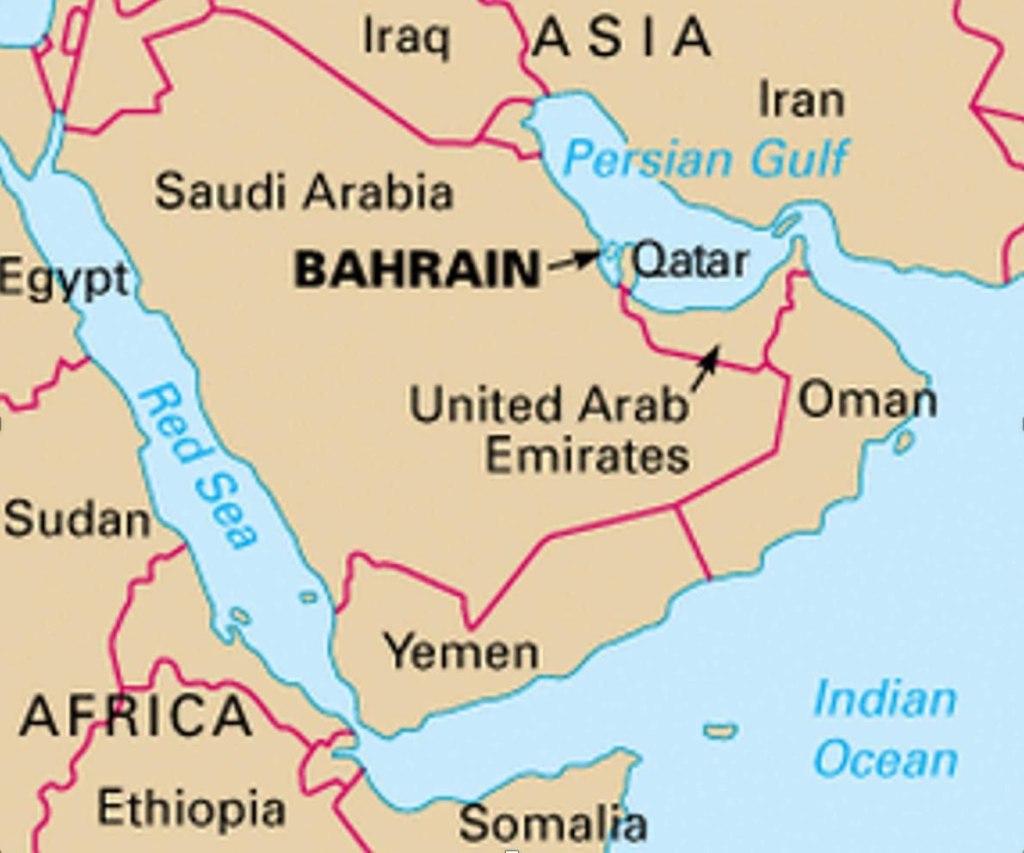
Jesus said that the end will come when the gospel is preached to all nations (Matthew 24:14). Although the gospel has been proclaimed to many nations over the past 2,000 years since Jesus ascended, there are still peoples yet to hear it. Many of these remaining peoples are Muslims. Islam began on the Arabian Peninsula, and today, 1.7 billion Muslims face this region in prayer—it is the heart of Islam.
There are seven countries on the Arabian Peninsula: Saudi Arabia, Yemen, the United Arab Emirates, Bahrain, Qatar, Kuwait, and Oman. Except for Yemen, the six Gulf nations are rich in oil and share similar histories, leading to many similarities among these countries. They are collectively referred to as the GCC (Gulf Cooperation Council).
The western region of the Arabian Peninsula is home to Mecca, a place of ancient civilization. The central area is largely desert, and tribal conflicts over territory were frequent. In the 20th century, the modern states emerged. Oman maintained its independence for centuries, forming a strong empire and establishing a mutually beneficial relationship with Britain. The western Hejaz Kingdom was once powerful, but the central Saudi tribe (Al Saud) rose to conquer Mecca and the wealthy Hejaz Kingdom, claiming most of the Arabian Peninsula and establishing Saudi Arabia in 1932. Not only Saudi Arabia, but Yemen, the UAE, Bahrain, Qatar, and Kuwait were also influenced by Britain in their formation.
Arabs are known for their strong trading spirit. A middle-aged man who has been doing business in Saudi Arabia for a long time once said, “Arabs seem to sit still, chewing cud like a camel, but they are always thinking about business.” Traders are characterized by a keen focus on profit, and particularly in Dubai, the eastern part of the peninsula has become a global trade hub. For traders, money is a stronger motivator than ideology.
Foreign Migration to the Arabian Peninsula
To understand modern GCC nations, one must also understand the history of Israel and Palestine. GCC countries are wealthy because of oil, and many foreigners live there. However, wealth does not come automatically with oil. So, how did so many nations come to reside in this desert? To understand the GCC, one must understand the history of Israel and Palestine.
In the past, GCC nations had discovered oil but were not yet wealthy. However, in 1948, Israel was established, and wars broke out between Israel and Arab nations. During this time, oil-producing countries (OPEC) implemented an oil embargo, causing global oil prices to skyrocket, bringing immense wealth to the GCC countries.
To build infrastructure, such as roads and buildings, the countries in the Arabian Peninsula invited foreign laborers. Today, in the GCC countries, foreigners make up 30-90% of the population. Initially, many South Koreans came, but most have since returned, and now the majority are from India, Pakistan, the Philippines, and Bangladesh. These foreign workers came with the purpose of working but began to accept Jesus and even established churches in these Islamic nations. Miraculously, underground and above-ground churches have been established in cities across all the GCC countries, where there had been none for 1,400 years.
After the birth of Islam, the Arabian Peninsula was spiritually barren, with no remaining churches. However, after 1,400 years of spiritual darkness, underground churches have been established through foreign workers. There is no other explanation but the supernatural work of God.
Why Has God Established Churches on the Arabian Peninsula?
When asked why they were sent here, foreign underground church members unanimously reply, “God has a purpose for sending us here,” but they don’t know exactly what that purpose is. Foreign workers are not permanent residents, and eventually, oil in the GCC countries will run out, and the foreign workers will leave. This means that in this limited time that God has permitted, there is a mission entrusted to the churches. God’s purpose in calling them is to fulfill the Great Commission through them.
In recent years, a multicultural missionary revival has been occurring in many cities of the Arabian Peninsula. Multinational church members are beginning to practically obey God’s heart and vision, which they have come to understand. They have started sending out short- and long-term missionaries, including missions trips to Israel and Palestine.
The Abraham Accords
The inheritance God has given to the churches on the Arabian Peninsula is to serve the remaining nations, particularly Israel and Palestine. God loves Israel and Palestine with a sovereign love, and Israel will be restored as a light to all nations.
For a long time, the Arabian Peninsula, as part of the Arab world, did not recognize Israel. However, this is rapidly changing. During the significant Islamic holiday of Ramadan in 2020, a special program aired, depicting times when Jews and Muslims lived peacefully together, sending a strong message about peace between the two groups.
In particular, the Abraham Accords in 2020 saw the UAE and Bahrain establish formal diplomatic relations with Israel, including direct flights and embassies.
The Abrahamic Family House in the UAE—a place where a mosque, synagogue, and church coexist—strongly promotes the message of peace between Arabs and Jews. Round-trip budget flights from the UAE to Israel can be as cheap as $300.
Although the Hamas-Israel conflict has currently put things on hold, Saudi Arabia is also expected to normalize relations with Israel soon. A path has been opened for the gospel to spread widely. Through the churches of the Arabian Peninsula, the restoration of Israel and Palestine will happen.

 Shalom Jerusalem שלום ירושילם