
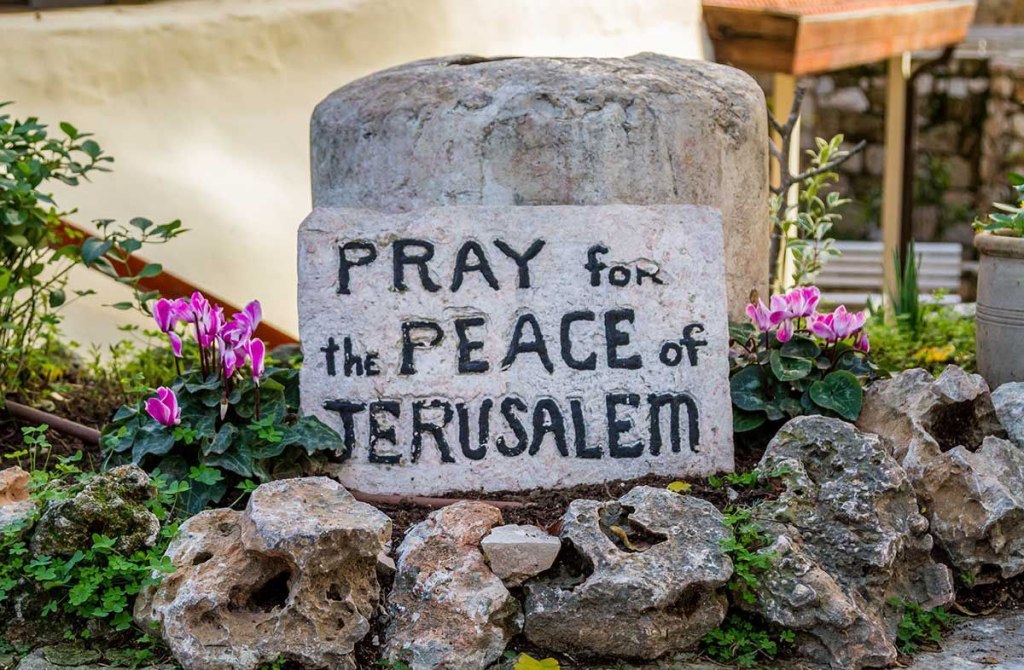
“Pray for the peace of Jerusalem. May those who love you be secure.” Through Psalm 122:6, God requests that we pray for the peace of Jerusalem. Additionally, Jeremiah 29:7 instructs us to “seek the peace and prosperity of the city to which I have carried you into exile. Pray to the LORD for it, because if it prospers, you too will prosper.”
The Bible does not frequently command us explicitly to pray, but it uniquely instructs us to pray for the peace of Jerusalem, linking Jerusalem’s peace with our own. This command is not solely for the Israelites but for all God’s children. The Bible references Jerusalem over 600 times, and it is the only city described as the City of God or the throne of God.
Because the Bible so uniquely highlights Jerusalem, it has often become an idol or a mystical intermediary to God throughout history. Jesus warns against such mysticism in John 4, and many historical tragedies stem from the idolization of Jerusalem. Therefore, while we should avoid mystifying Jerusalem, we must also recognize the divine mystery God reveals through it, acknowledging God’s plan beyond human understanding.
The Significance of Jerusalem
Peace is a crucial need for all creation and cities under the curse of sin. Historians say that only 270 of the past 3,500 years were without war, indicating humanity’s continual choice of conflict. God desires the restoration and peace of all creation and wants His children to share this compassionate heart. The Bible explicitly calls us to pray for the peace of Jerusalem.
Why is Jerusalem significant? One clear truth is that God proclaims His truth across time and space. Jesus Christ declares, transcending millennia, that He is the way, the truth, and the life. Similarly, Jerusalem transcends time and space as a physical space proclaiming God’s sovereignty over history. God continually calls His people to Jerusalem to declare His will, starting with Abraham and continuing today.
God’s plan involving Jerusalem is evident in Genesis 22, where He tests Abraham on Mount Moriah, foreshadowing the coming Messiah. After this test, God promises Abraham three blessings, explaining His plan: Abraham’s descendants will be as numerous as the stars, they will possess the gates of their enemies, and through them, all nations will be blessed. This echoes Genesis 3:15’s proto-gospel, describing the spiritual battle and the victory of the seed of the woman.
Psalm 24 through David also connects to Jerusalem, mentioning the spiritual warfare and the gates: “Lift up your heads, you gates; be lifted up, you ancient doors, that the King of glory may come in.” This highlights the spiritual battle and the significance of Jerusalem’s gates, paralleling Genesis 22 and Matthew 16, where Jesus speaks of building His church on Peter’s confession, with the gates of Hades not overcoming it. The blessing of possessing the enemy’s gates links to the church’s authority, starting with the Holy Spirit’s descent at Pentecost, growing like the stars, and carrying the authority to bind and loose, spreading the gospel to all nations.
Considering the gates’ significance, Psalm 24’s proclamation aligns with the spiritual battle, ending with the King of glory entering Jerusalem as the Prince of Peace.
The Fate of Jerusalem
Jerusalem’s fate is paradoxical and contradictory, marked by blessings and curses, divine actions, and spiritual warfare. This structure inevitably leads to endless wars and conflicts, creating a tragic history. Jesus, weeping over Jerusalem 2,000 years ago, lamented its fate, foreseeing its destruction.
Zechariah (Zechariah 9:9) prophesied that the King bringing righteousness and salvation would come to Jerusalem humbly on a donkey. Jesus fulfilled this prophecy 2,000 years ago, entering Jerusalem through the eastern gate (Golden Gate). This gate remains closed, as Ezekiel’s vision (Ezekiel 43:1-5, 44:1-3) foresaw God’s glory entering through it.
When Jesus entered Jerusalem, the crowds proclaimed, “Blessed is he who comes in the name of the Lord,” echoing Psalm 118:26, welcoming the Messiah. The Pharisees asked Jesus to rebuke them, but He said if they kept quiet, the stones would cry out, indicating this proclamation must happen.
Jesus wept over Jerusalem, lamenting that they did not recognize what would bring them peace, predicting the city’s future destruction because they did not recognize God’s coming.
Fear and Peace
Jerusalem’s fate, marred by destruction, results from endless wars and conflicts rooted in sin, which originates from disobedience. The fundamental reaction to sin is fear, first expressed in Genesis 3:10. To bring peace to Jerusalem, this issue of fear and sin must be addressed.
Freedom from fear does not come by avoiding it, masking it, or through transient mystical experiences. Fear, deep within us, is our inherent response, driving human history’s darkness.
The only way to overcome this fear is through Jesus, the Prince of Peace, who conquered sin with God’s love. When Jesus enters our hearts, fear and darkness are dispelled, replaced with grace and truth.
Jesus first proclaimed peace to His fearful disciples after His resurrection, showing them His wounds and declaring Himself as the risen Messiah.
God’s Timing, God’s Name
Shalom and completeness share the same root. God’s creation was completed in seven days, representing perfection and peace. Similarly, Jerusalem’s peace relies on God’s timing and method, under His sovereignty. Jerusalem’s peace will be achieved by Jesus Christ, the Prince of Peace, in God’s time and way.
Jesus’ prophecy in Matthew 23:37-39 reveals that Jerusalem’s desolation ends when they proclaim, “Blessed is he who comes in the name of the Lord.” This declaration is from Psalm 118, emphasizing the importance of God’s name. The people of Israel began calling on the name of the Lord from the time of Seth, as recorded in Genesis 4:26.
The Bible consistently highlights the significance of calling on the Lord’s name, with profound implications for salvation and God’s presence. Surprisingly, in Israel, two names are never spoken: God’s name, Yahweh, out of reverence, and Jesus’ name, replaced with a curse word.
Proverbs 30:3-4 questions the knowledge of God and His Son’s names, posing a challenge that resonates today. For Jerusalem and Israel to call on the Lord’s name means wholeheartedly inviting Jesus, the Prince of Peace, into their midst.
Shalom Jerusalem
Jerusalem is where the history of blessings began and where the history of curses also started. It is the final battleground of spiritual warfare, where blessings and curses clash. Historical progress involves God’s absolute sovereignty and His people’s obedience. We must reject fatalism and the Messiah complex, humbly acknowledging God’s sovereignty while pursuing His plan through our obedience.
The Prince of Peace, Jesus, does not break in or climb over walls; He enters through the gates, respecting our identity and dignity. True peace cannot be achieved through violence or coercion but through Jesus, who enters as the Prince of Peace.
Jesus gives us authority over the gates, calling us to pray for the peace of Jerusalem. The peace of Jerusalem opens the historical and global spiritual victory gate. Proclaiming, “Blessed is he who comes in the name of the Lord,” welcomes Jesus, the King of Glory.
Until that day, let all who love Jerusalem and seek God’s will keep praying for its peace, ensuring that God does not rest until He establishes Jerusalem and makes it a praise in the earth!
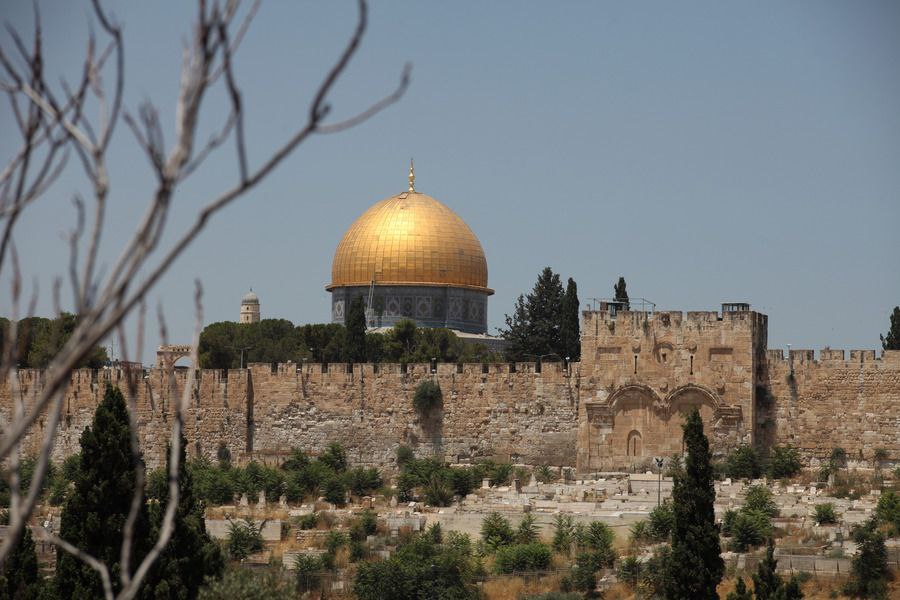
 Shalom Jerusalem שלום ירושילם